


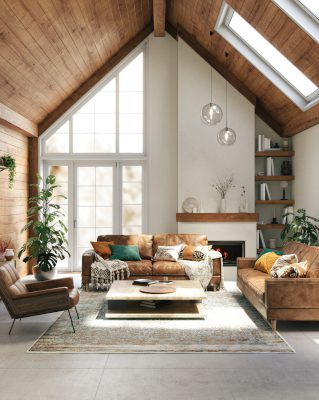
 For years, white interiors have defined contemporary residential design. Crisp walls, neutral cabinetry, and minimal contrast were treated as the standard for luxury and restraint. That language is shifting. Across high-end homes, designers are moving toward warmth, texture, and material depth. Oak, walnut, clay, and softened neutrals are replacing cool whites and grey-based palettes. The goal is to create spaces that feel composed rather than stark.
In-house design now prioritizes how a home feels as much as how it reads visually. Here is how we have been using warm tones and wood textures to create elegant, soft, and luxurious spaces:
- Introduce wood through architectural elements: Flooring, ceiling beams, and built-in millwork are the most effective places to create warmth. Industry reporting shows a clear shift toward natural wood finishes that highlight grain, allowing character to lead in-house design direction.
- Layer warm neutrals: Walls no longer need to be bright white to feel clean. Mushroom and clay tones are being used as base layers that support both wood and stone textures. These shades create continuity across open spaces and soften transitions between rooms.
- Use mixed wood tones to add depth: Pairing light oak floors with deeper walnut cabinetry or furniture introduces contrast within a controlled palette. This reflects a broader design movement toward tonal variation rather than high-contrast minimalism.
- Bring warmth into textiles: Linen, wool, bouclé, and velvet in earthy tones help extend wood and neutral palettes into livable comfort. These materials prevent interiors from feeling overly architectural.
Warm tones and natural woods are shifting homes toward a more grounded form of luxury. When applied thoughtfully, these elements create interiors that feel considered and cohesive. In-house design brings these decisions together to ensure materials, finishes, and lighting work together for a home that feels indulgent and intentional.